Yves Le Fur
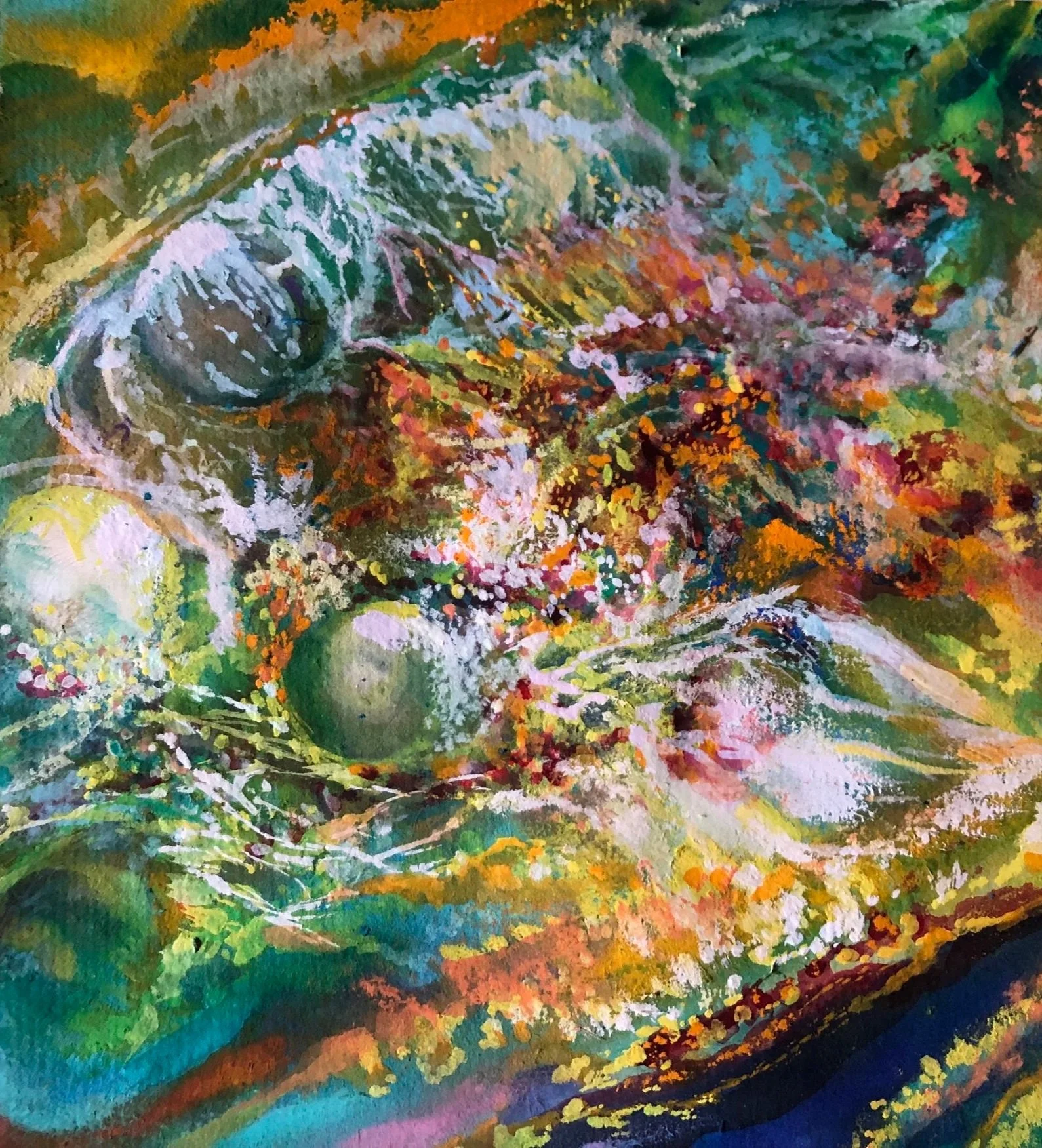
The albums’ “bad” thick paper mercilessly absorbed what “good” watercolour paper would have faithfully rendered. I had to start over again and again, repeating the work that had vanished the day before. “A kind of blotting paper,” someone remarked, with a hint of disdain. On the contrary, it offered the inks unexpected surprises, effects of a kind that are “not made by human hand”.
And yet I continue to work with this format and these rag papers.
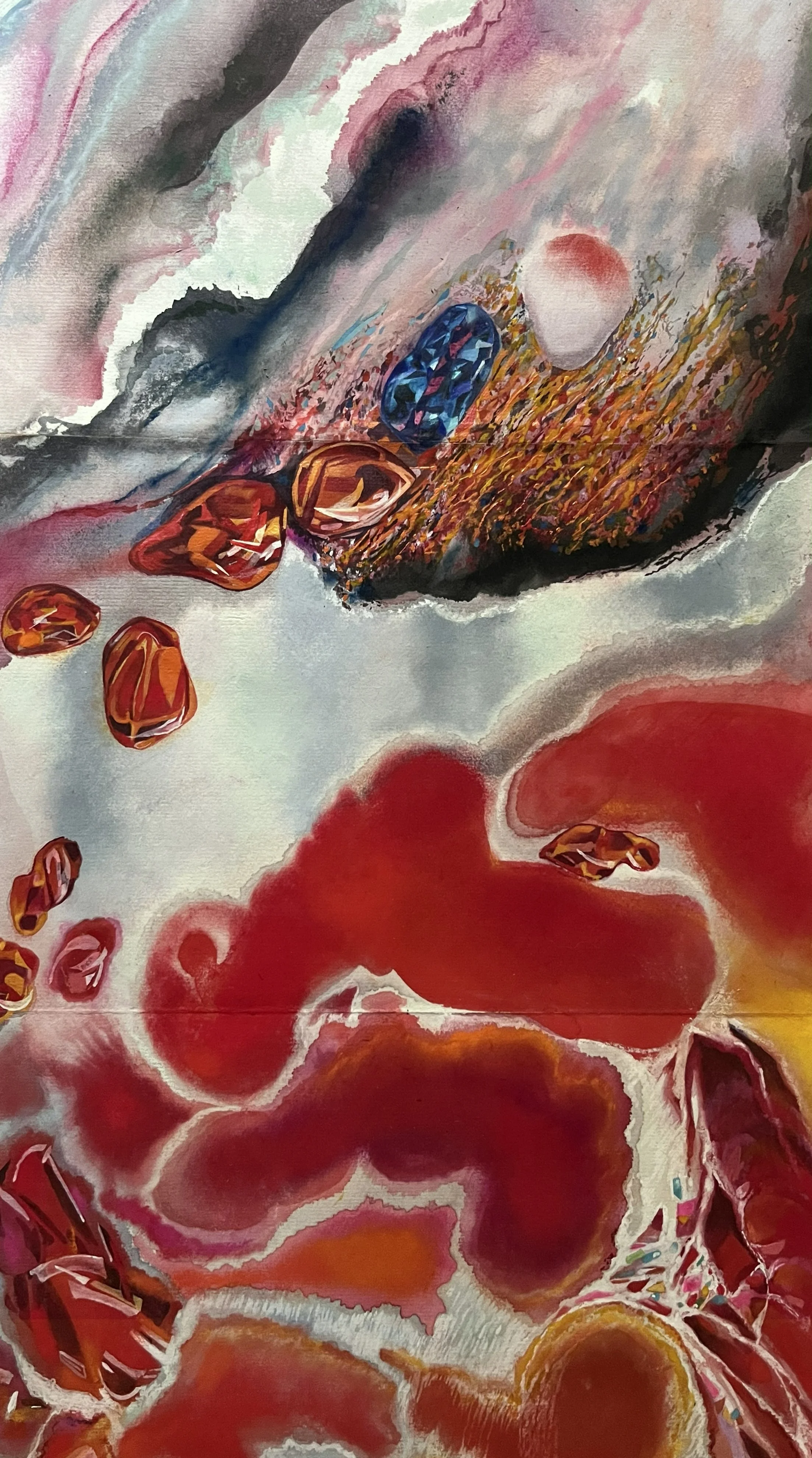
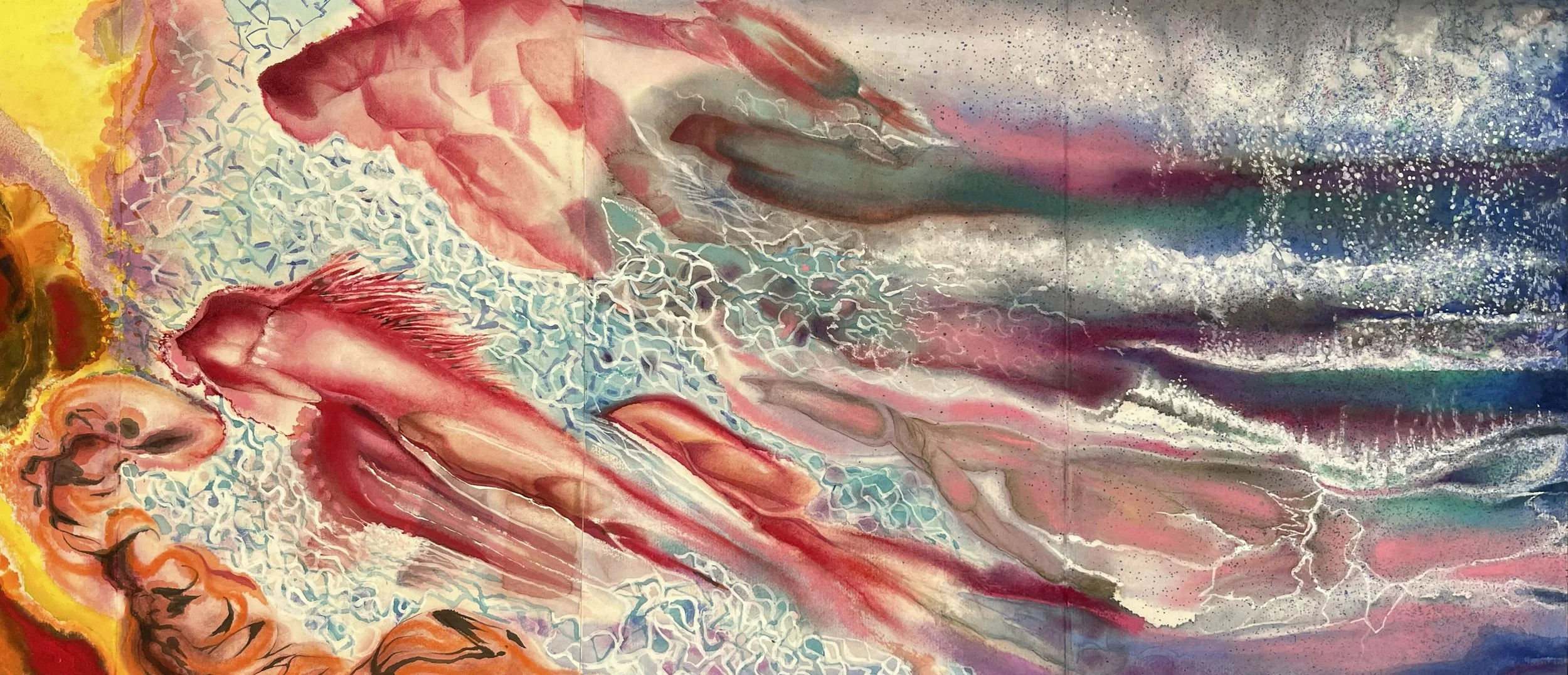
They open up micro-worlds of seething blood and flesh, or vast horizons of raging seas, currents and breakers, clouds or veins, maps and bird’s-eye views that transform into liquid networks, glimmers of light or unfathomable darkness. They allow me to move from an extremely close-up vision to hazy distant vistas, to bring together rose-pink delights and the murkiest greens.
Within these ambiguities and constant shifts, I seek to express the world’s nervous vitality, sometimes gathering into rivers and reefs, breaths and stillnesses, collisions and fluidities—as in all our lives.
– Yves Le Fur
I first discovered accordion-fold books, also known as leporellos, in 2015, in Tokyo, at the Itoya store in Ginza. But what struck me most were the extraordinary shades of ink, made for filling fountain pens and presented in beautiful, thick-walled glass bottles.
Yet there was no need to travel so far. I later learned that these formats were, of course, centuries old, and that their name derives from Leporello, Don Juan’s servant, who presents Donna Elvira with the long list of his master’s conquests, folded like an accordion, in the first act of Mozart’s opera Don Giovanni.
Unlike a single sheet, bound by the constraints of the rectangular format, a succession of sheets invites one to dispense with perspective, to move from one pictorial space to another, from one technique to another.
The leporello thus suggests sequences, much like a film synopsis or a codex, introducing a sense of temporality into painting. Laid out horizontally, it evokes narrative, the linear progression from beginning to end; vertically, it suggests the conventions of up and down, of gravity. It can be spread out completely flat or leafed through like a book, allowing the eye to lose itself in detail or take in the overall structure.
Easy to carry in a travel bag, my nomadic practice initially involved nothing more than a box of watercolours. It gradually grew heavier with gouache, light pastels and those magnificent (and expensive) inks, so often confiscated at airport security checks—except once, thanks to a customs officer who was himself a watercolourist.