Johan Van Mullem
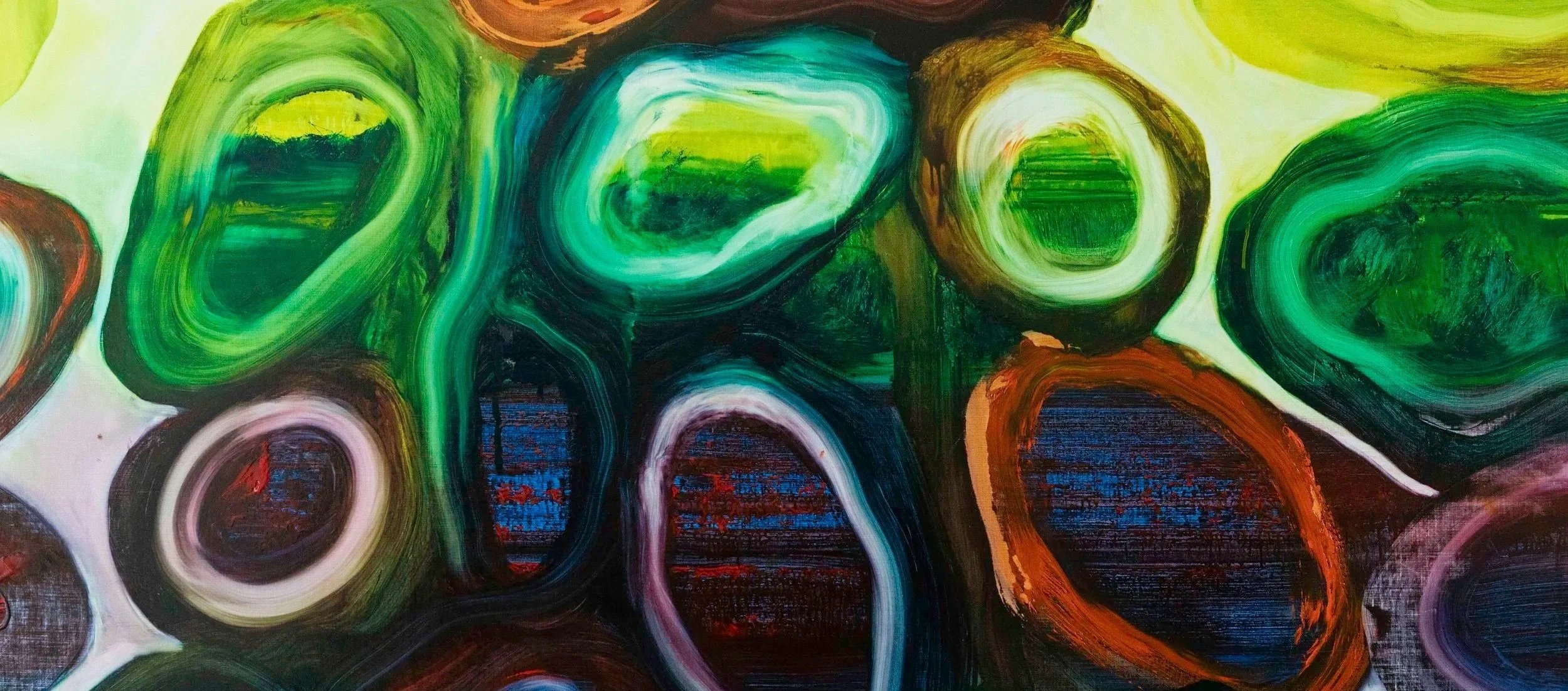
The faces that surface in his work do not belong to portraiture but to presence. They are states of gaze, densities of emotion, psychic spaces where interior and exterior contaminate one another. Each figure seems caught in a movement of translation, positioned at the threshold of legibility. This almost-seeing, this almost-losing, engages a perception that is constantly destabilised. Johan Van Mullem does not represent; he reveals what resists representation.
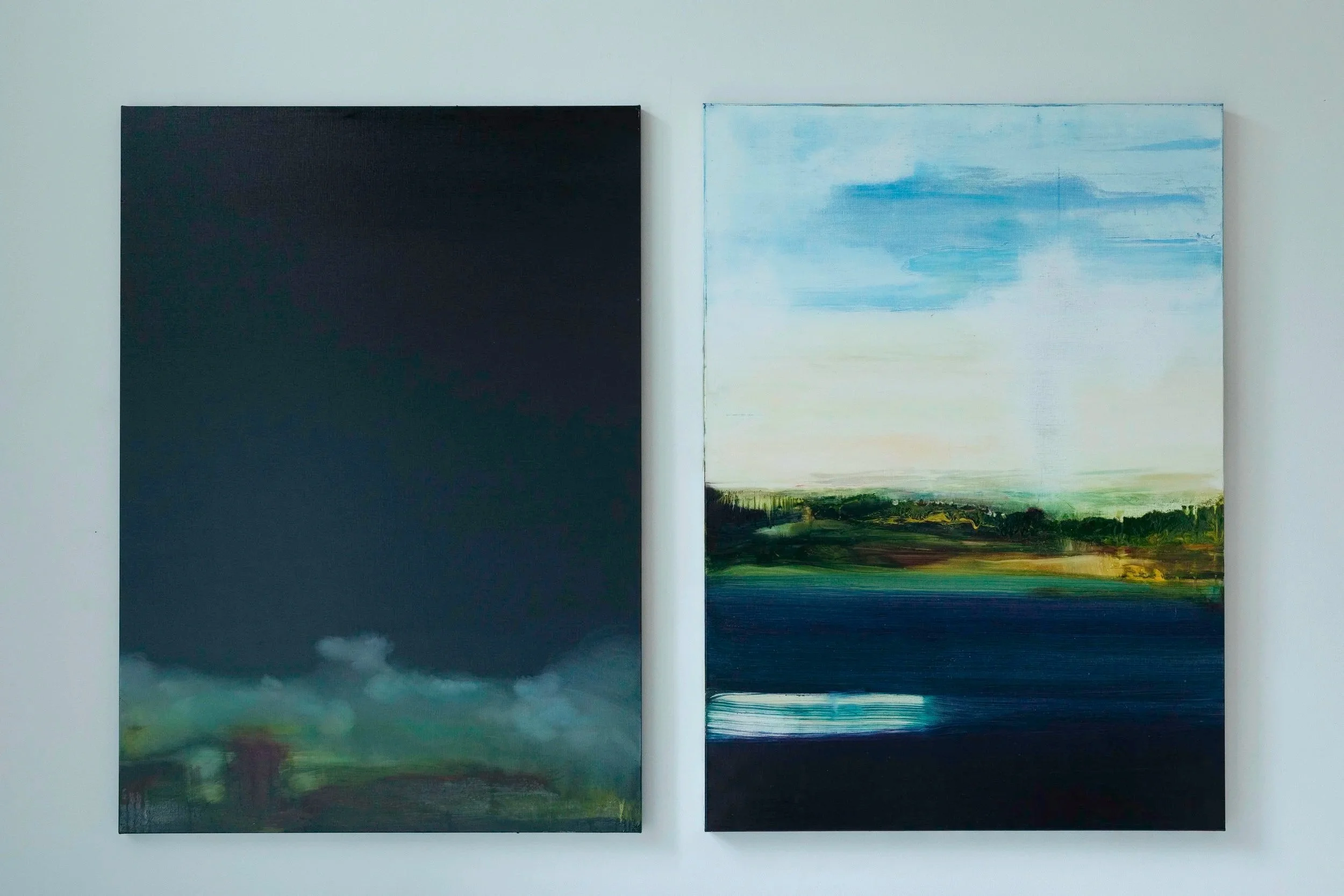
His images function as topographies of the sensible: zones of turbulence where the strata of the world—mineral, memorial, imaginary—overlap and fracture. The work thus advances through sedimentation. Each layer is a moment in time, a hypothesis. Each withdrawal is an opening. Human beings seek to contain the flow of life, to impose order on what exceeds them. They erect walls and borders that never fully hold back what presses to cross them, allowing glimpses, through their cracks, of the untameable breath of existence.
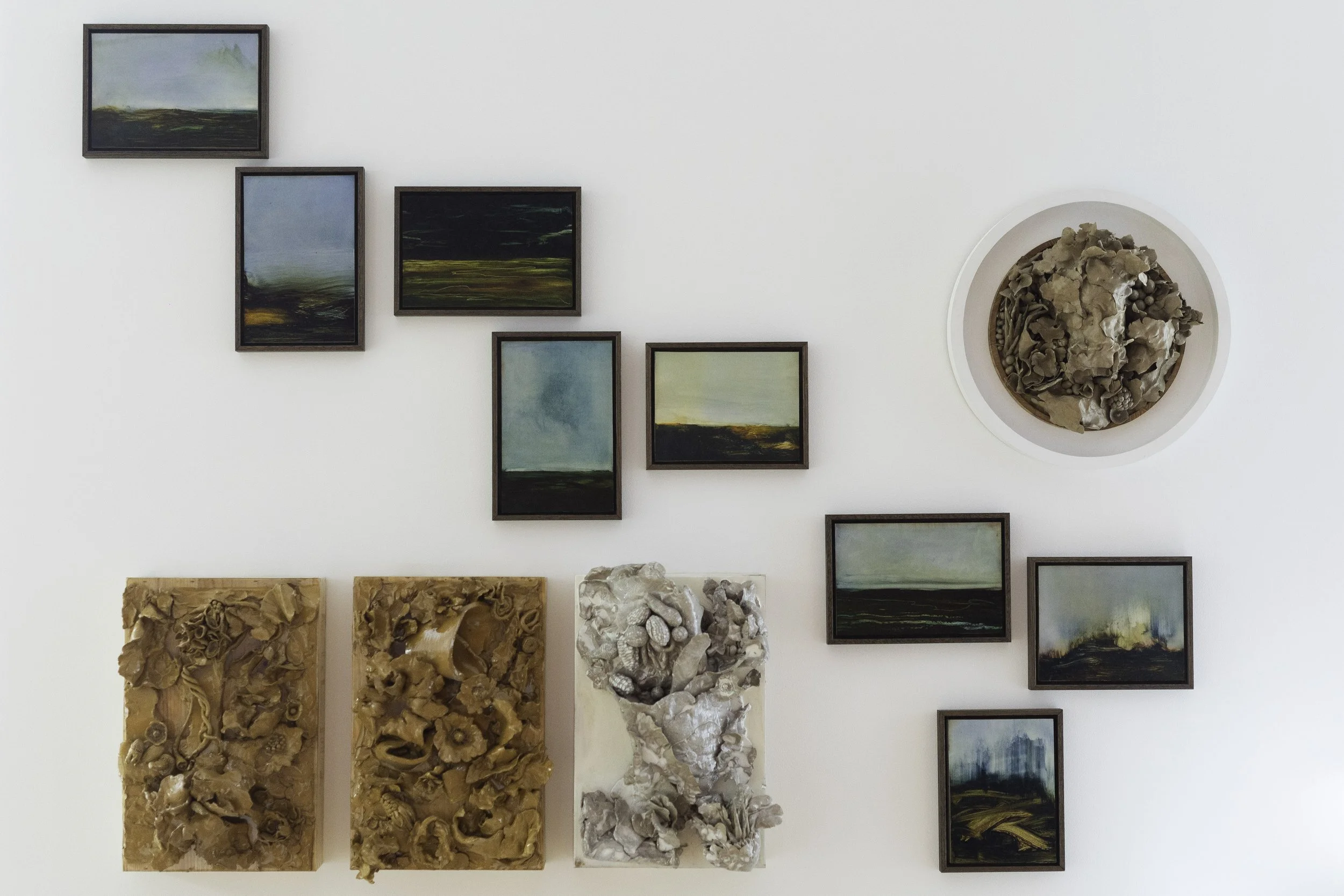
In these works, space is constantly on the verge of coming undone. Lines waver, contours vibrate, materials intertwine until the very idea of boundary is blurred. This is not a formal abandonment; it is a trial of freedom. Following the rule does not open space; one must consent to indeterminacy, accept turmoil as a generative principle. Vestiges of Disorder thus brings together works that occupy this delicate point of balance where form invents itself through disintegration. Nothing here is gratuitous: disorder is not a lack, but a constitutive element of visual thought. Johan Van Mullem’s images carry the vibration of a world in perpetual renewal—a world in which creation can only emerge through the ruin of what came before.
In Johan Van Mullem’s work, the image is never given outright: it is forged within an unstable interval, a zone of friction where form searches for itself, disappears, and re-emerges. Vestiges of Disorder brings this fundamental process to light. Here, disorder is not the opposite of construction; it is its very condition. What unfolds on the surface—whether a face, a fragment of matter, or a constellation of layers—arises from an original tension between erasure and emergence.
The artist works through successive overlays. With each gesture, something appears, something is lost. Layers accumulate not as a linear progression but as a creative exploration, where error, erasure, and trace become forms of knowledge. The motif is never fixed: it circulates, mutates, unfolds. Looking closely at his works, one can discern the residues of a previous face, the shadow of an abandoned form, the persistence of a contour that refuses to disappear. These relics—these fragments of earlier images—constitute the material evidence of a silent struggle between the visible and the fleeting.